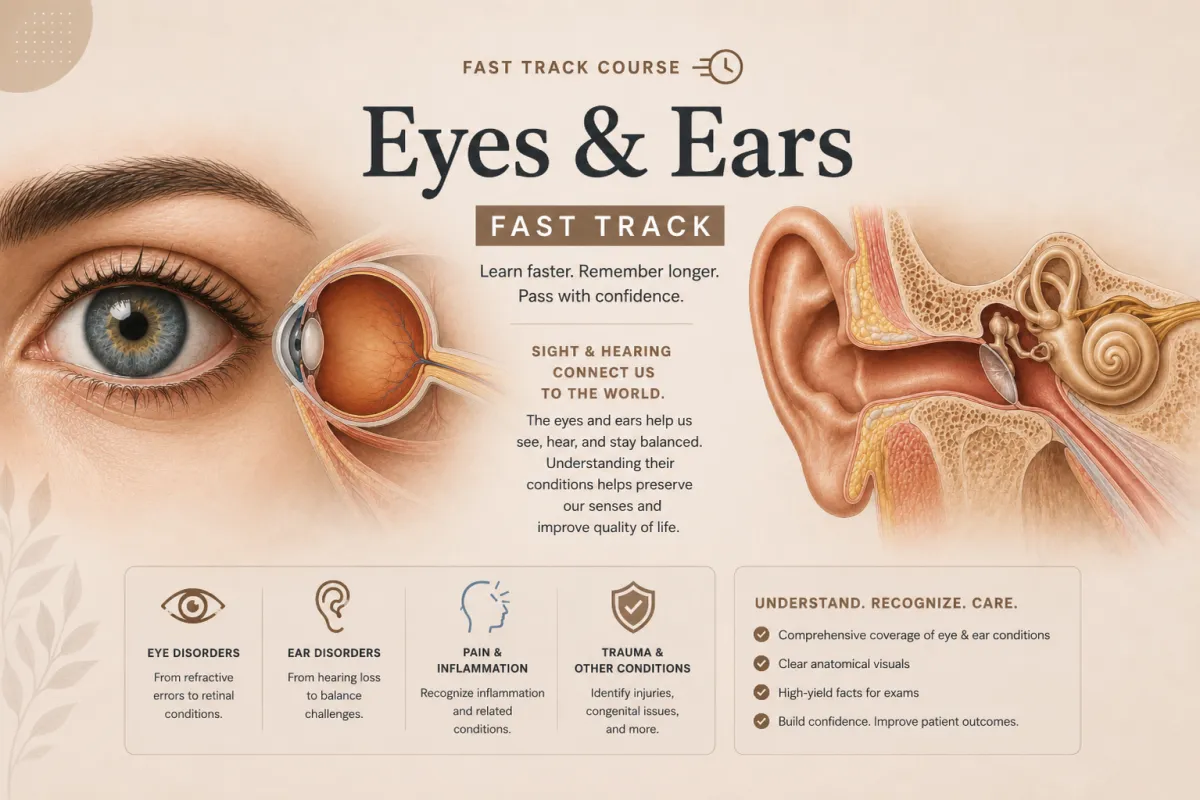
The focused foundation every confident coder needs.
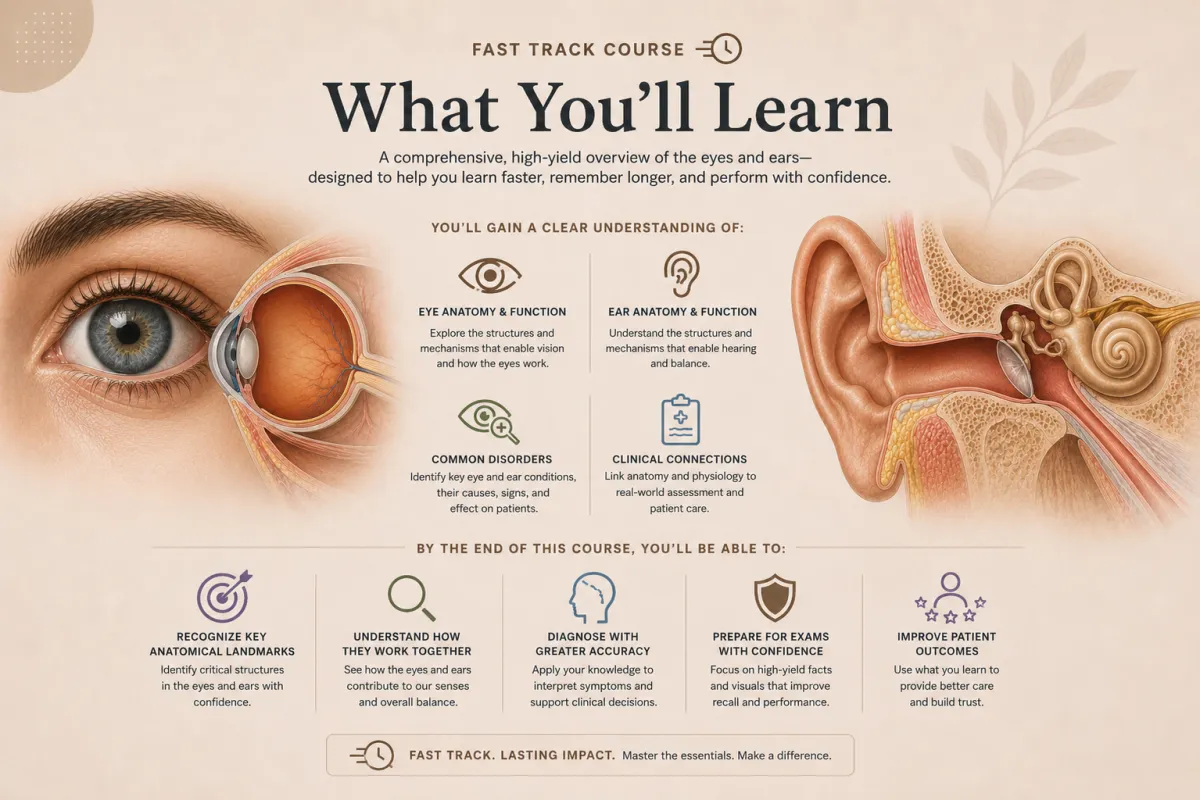
What You'll Learn
Eye and ear anatomy made simple
Vision, hearing, and balance fundamentals
Common eye and ear disorders
High-yield medical terminology
Disease processes and clinical concepts
Key anatomy for accurate coding
Documentation and diagnosis recognition
ICD-10-CM and CPT coding connections
Exam-focused concepts and review
Build confidence in specialty coding
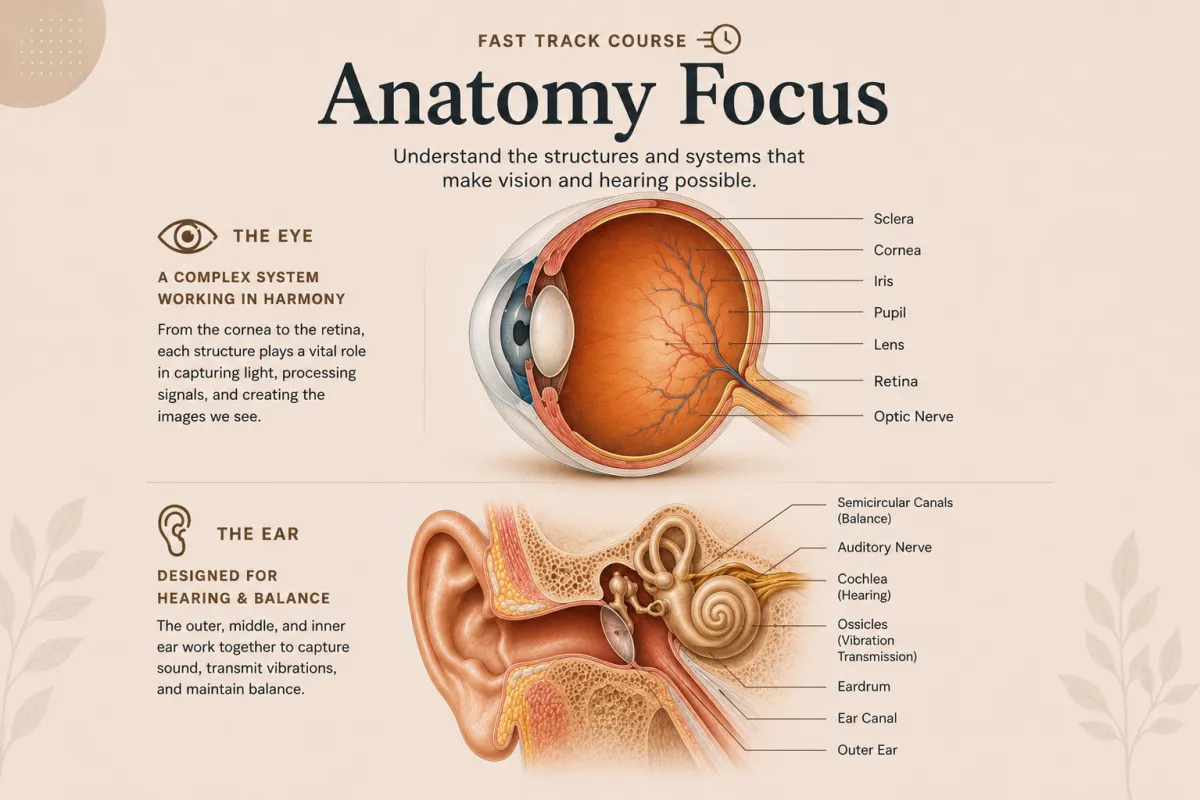
Anatomy Focus
External eye and ear anatomy
Cornea, lens, retina, and optic nerve
Iris, pupil, and ocular structures
Outer, middle, and inner ear
Ossicles and tympanic membrane
Cochlea and semicircular canals
Auditory and vestibular nerves
Vision, hearing, and balance pathways
Key anatomical landmarks for coding
Clinical anatomy made easy to understand
Understanding normal anatomy provides the foundation needed to recognize disease processes, interpret medical documentation, and accurately assign codes.
The Coding Concepts You Don’t Want to Miss
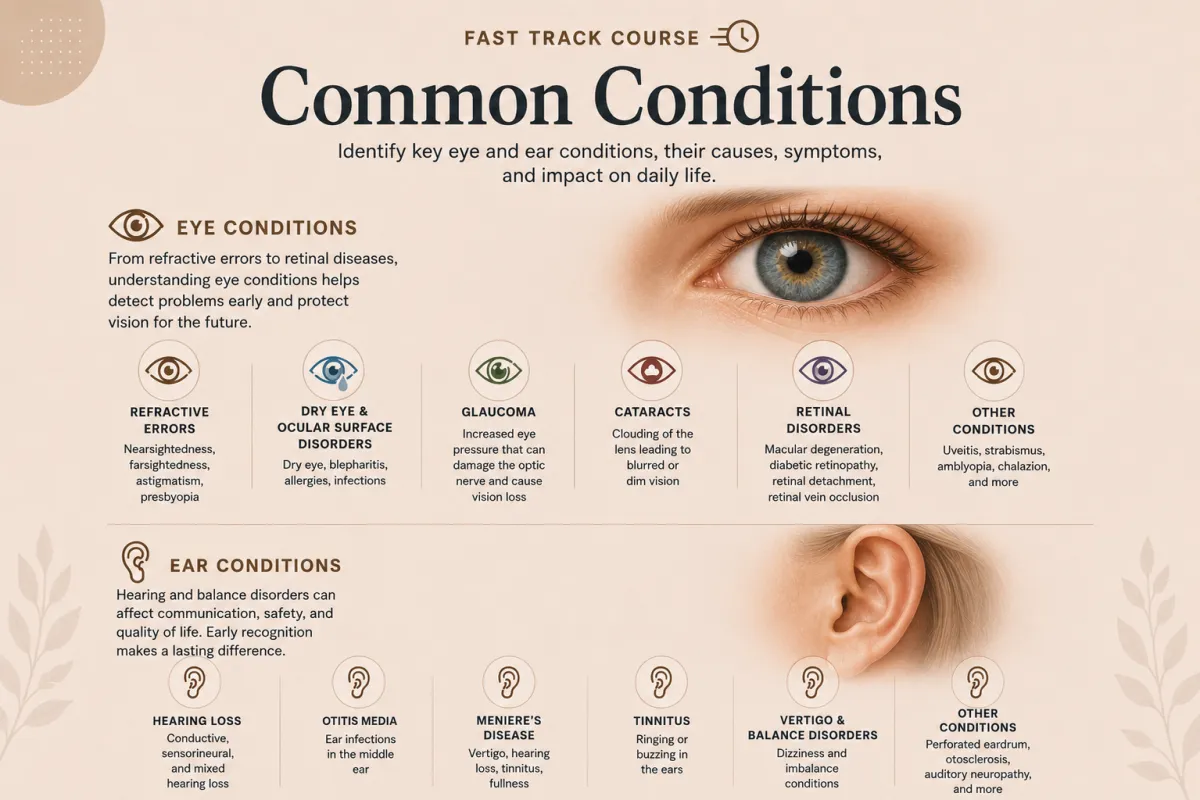
Common Conditions
Learn the signs, symptoms, and coding considerations for common endocrine system conditions, including:
Refractive errors and vision disorders
Dry eye and ocular surface diseases
Cataracts and glaucoma
Retinal disorders and optic nerve diseases
Conjunctivitis and corneal conditions
Hearing loss and tinnitus
Otitis externa and otitis media
Vertigo and balance disorders
Meniere disease and labyrinth disorders
Eye and ear trauma
HERE'S WHAT YOU'LL BE LEARNING IN EACH LESSON:
LESSON 1:
RECOMMENDED SUPPLIES
To kick things off, we'll dig into what supplies to use and why these supplies will set you up for success.
LESSON 2:
LOWERCASE LETTERS
In this lesson, you'll watch a detailed breakdown of modern calligraphy as we letter each letter 3 different ways.
LESSON 3:
UPPERCASE LETTERS
Building on what you have learned, we will continue with the same method and walk through the uppercase letters in 3 different styles.
LESSON 4:
WORDS
It's time to connect those letters to create words and go over spacing and bounce. Then we walk through common words.
LESSON 5:
PRINT ALPHABET
You'll also want to learn print letters to add in your lettering phrases. This lesson demonstrates lower and uppercase letters in this style.
LESSON 6:
NUMBERS
You'll also need numbers for dates and bible verse references so this lesson instructs how to form the numbers in multiple styles.
LESSON 7:
COMPOSITION
Putting it all together! Now it's time to brainstorm how to layout your lettering to create a completed hand lettered design you'll be proud of!
The course has NO EXPIRATION DATE and can be viewed as many times as desired. Save, print, and get ready to advance your coding career!