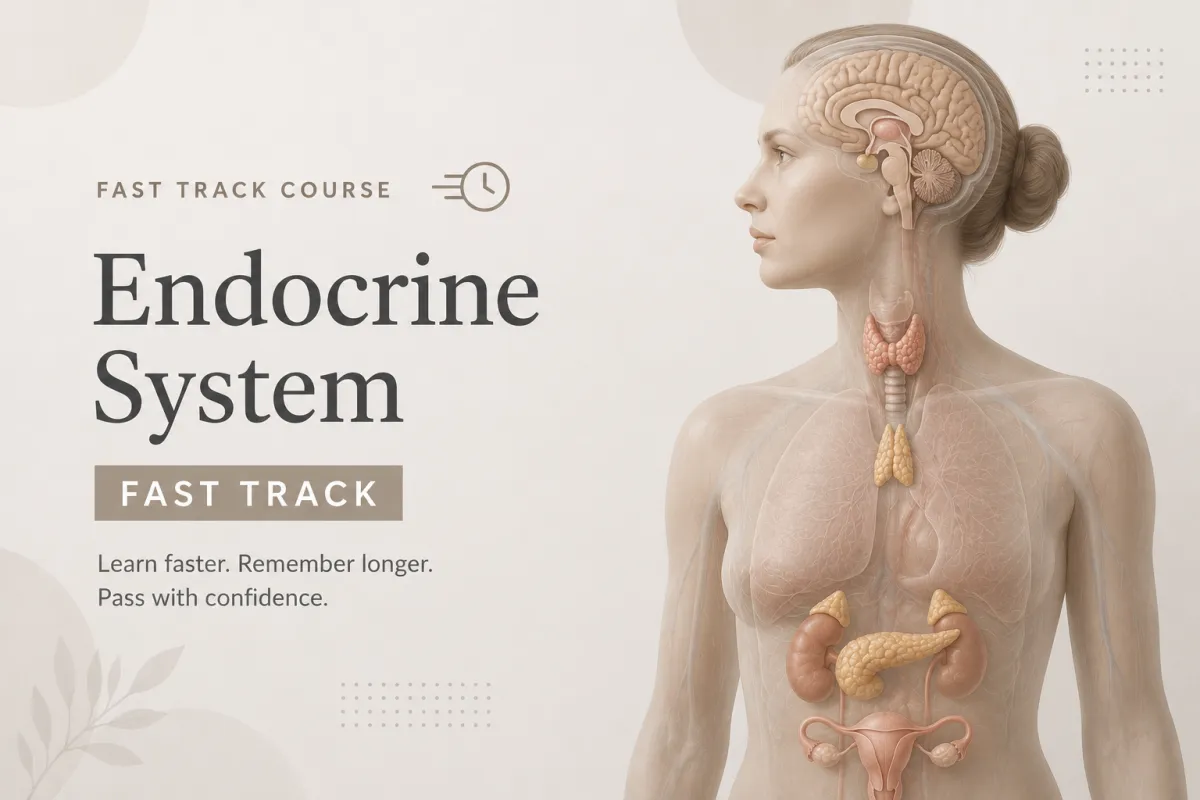
The focused foundation every confident coder needs.
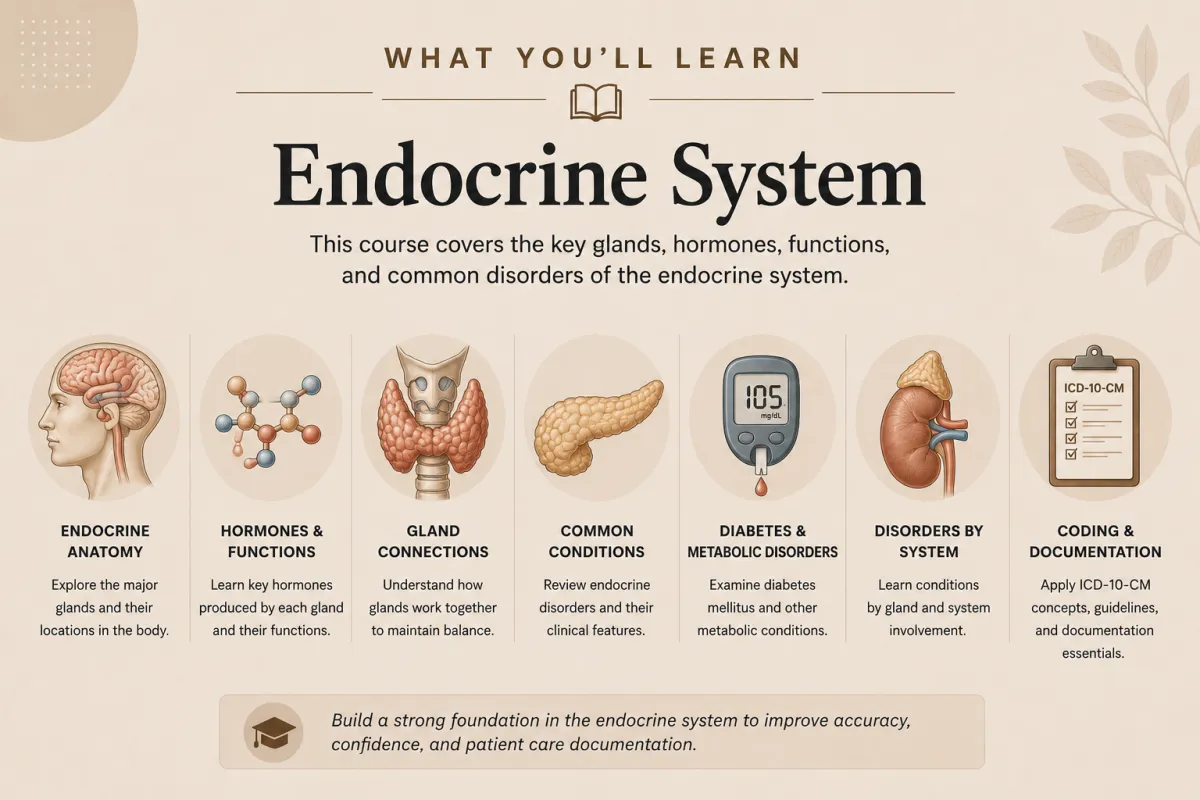
What You'll Learn
Endocrine anatomy and gland functions
Hormones and their role in body regulation
Thyroid, pituitary, adrenal, and pancreatic disorders
Diabetes and metabolic conditions
Common endocrine signs and symptoms
Documentation concepts that impact coding
ICD-10-CM coding principles for endocrine disorders
Coding tips, examples, and practice exercises
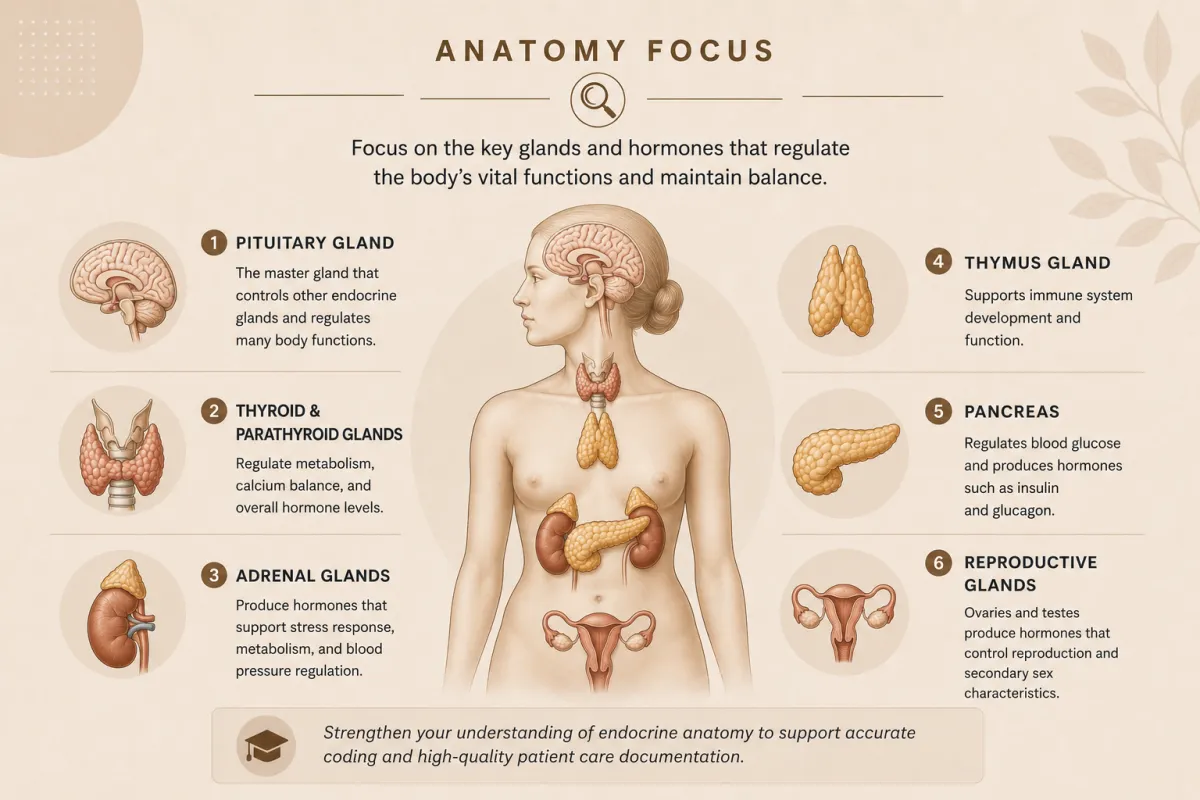
Anatomy Focus
Develop a strong understanding of the structures that make up the endocrine system, including:
Pituitary gland anatomy and function
Thyroid and parathyroid glands
Adrenal gland structure and hormones
Pancreatic endocrine function
Thymus gland overview
Reproductive endocrine glands
Hormone production and regulation
Endocrine pathways relevant to coding
Understanding normal anatomy provides the foundation needed to recognize disease processes, interpret medical documentation, and accurately assign codes.
The Coding Concepts You Don’t Want to Miss
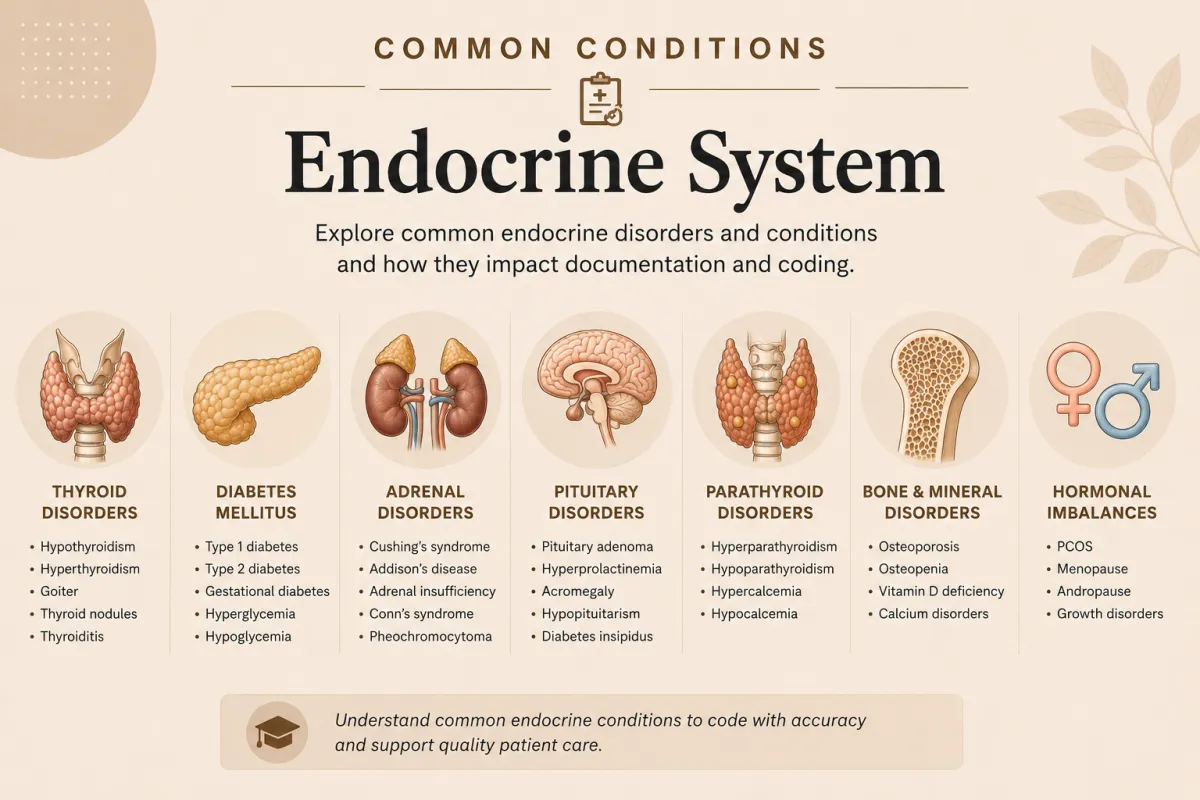
Common Conditions
Learn the signs, symptoms, and coding considerations for common endocrine system conditions, including:
Diabetes mellitus (Type 1 and Type 2)
Hypothyroidism and hyperthyroidism
Thyroid nodules and goiter
Adrenal disorders
Pituitary gland disorders
Parathyroid disorders
Hormonal imbalances
Osteoporosis and metabolic bone disorders
HERE'S WHAT YOU'LL BE LEARNING IN EACH LESSON:
LESSON 1:
RECOMMENDED SUPPLIES
To kick things off, we'll dig into what supplies to use and why these supplies will set you up for success.
LESSON 2:
LOWERCASE LETTERS
In this lesson, you'll watch a detailed breakdown of modern calligraphy as we letter each letter 3 different ways.
LESSON 3:
UPPERCASE LETTERS
Building on what you have learned, we will continue with the same method and walk through the uppercase letters in 3 different styles.
LESSON 4:
WORDS
It's time to connect those letters to create words and go over spacing and bounce. Then we walk through common words.
LESSON 5:
PRINT ALPHABET
You'll also want to learn print letters to add in your lettering phrases. This lesson demonstrates lower and uppercase letters in this style.
LESSON 6:
NUMBERS
You'll also need numbers for dates and bible verse references so this lesson instructs how to form the numbers in multiple styles.
LESSON 7:
COMPOSITION
Putting it all together! Now it's time to brainstorm how to layout your lettering to create a completed hand lettered design you'll be proud of!
The course has NO EXPIRATION DATE and can be viewed as many times as desired. Save, print, and get ready to advance your coding career!